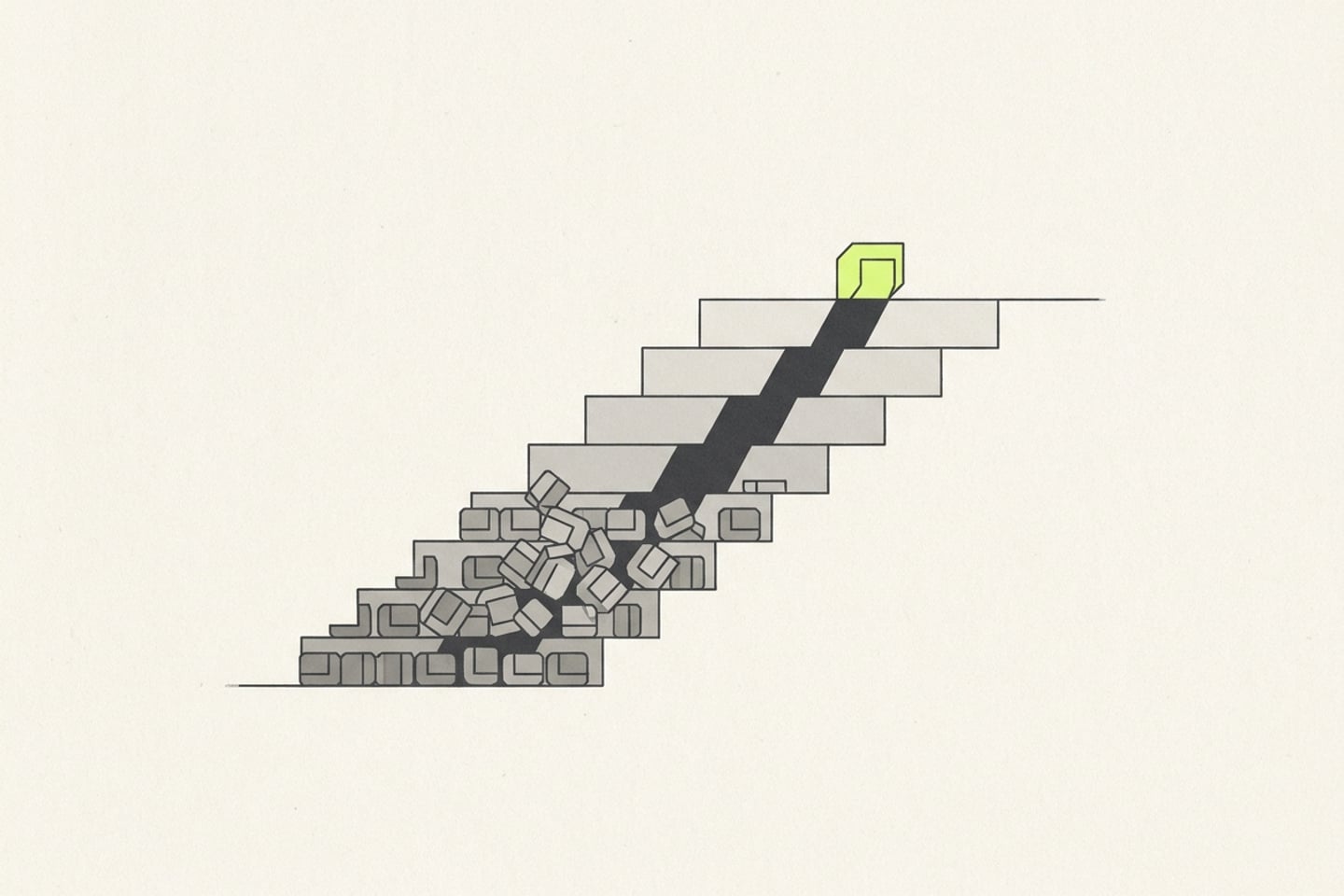
The graduation problem.
Enterprises are not short of AI pilots. They are short of pilots that become systems. The gap is not technical, and it is not change resistance. It is that nobody funds the part after the demo.
By Manish Garg
Exploring over the Horizon
In focus
Enterprises are not short of AI pilots. They are short of pilots that become systems. The gap is not technical, and it is not change resistance. It is that nobody funds the part after the demo.

Recent
Most enterprises have run process intelligence as a project: sponsor it, run an engagement, file the report, disband. Agents are about to make the always-on model the only one that works.
In 1990 Michael Hammer said do not automate, obliterate. A third era of reengineering returns to that idea, this time with agents that can redesign the work itself.
Enterprise software has moved in waves, each codifying a deeper layer of the company. The first captured transactions, the second information. The third reaches the tacit layer.
"We can know more than we can tell." Sixty years on, Polanyi's paradox is exactly where enterprise AI stalls: the tacit last mile that resists being written down.
Claims is the use case every insurer quotes, and the one that keeps under-delivering. Why the disappointment cycle repeats, and what actually changes once agents enter the loop.
Every enterprise AI portfolio is a list of existing workflows made faster. The real prize is not automating the work you do. It is asking whether it should exist.
Themes
From Demystified
Tests for model behavior. "It passed our evals" is the new "it compiles," and about as reassuring.
DemystifiedThe raw record of what happened, in what order, to what. The substrate every process claim rests on, and the easiest thing in the stack to underestimate.
DemystifiedRunning a proposed redesign against work that already happened, to find out how it would have gone. The cheapest way to kill a bad idea.
From Resources
From the margins
Rating requested: Exceeds Expectations.
One agent is always right. The other is always wrong, with total confidence. You get one question. What do you ask?
What the invoice process says it does, and what the data says it actually does.